

As well as giving you something comfortable to lie on, your sleeping mat provides vital insulation from the cold ground.
Unless you’re camping in very cold temperatures, you can actually lose more heat to the ground than to the surrounding air – up to three times more in some conditions! This makes a good camping mat absolutely essential. But how do you choose?
Ultimate guide to sleeping mats

Why do you need a sleeping mat?
Two main reasons: comfort and warmth. In almost all camping situations, the ground will be colder than your body. When you lie down, heat passes from your body to the ground by conduction. Your sleeping bag doesn't keep you warm in this situation as all the fill beneath your body gets compressed. This squeezes all the insulating air out and means that your sleeping mat is the only thing keeping you warm from below.
Types of sleeping mat
There are three different types of sleeping mat, each using a different method to insulate you from this conductive heat loss.

What is a closed-cell foam mat?
Foam mats are made from highly insulating closed-cell foam. This foam contains lots of tiny sealed-off air pockets which provide insulation from the ground below. Closed-cell foam mats have been around for decades and they’re still going strong even now; no self-respecting Scouts trip or Duke of Edinburgh expedition is complete without a foam roll mat hanging off the bottom of a rucksack!
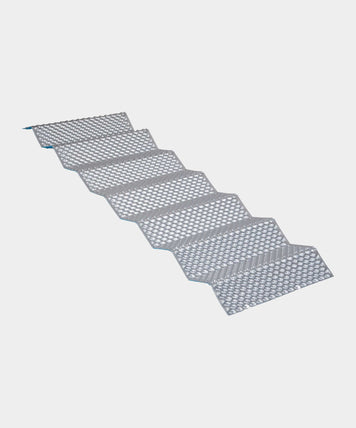
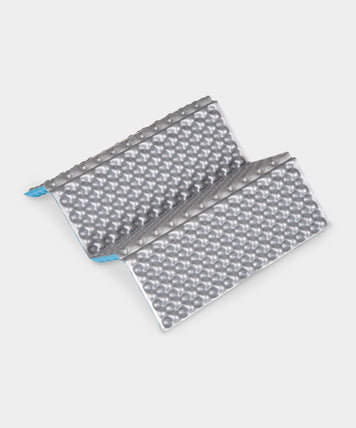
Closed-cell foam mats are very lightweight and you can’t puncture them so they’re almost indestructible. The downside is that they can be a bit hard to lie on, and they’re so long (the width of the average human) they have to be strapped to the outside of your rucksack. This certainly makes squeezing through train doors a challenge! Some foam mats now use a folding ‘z’ construction to make them easier to pack. Other recent innovations include aluminium film coatings to reduce heat loss by radiation and 'egg box' constructions that trap pockets of still insulating air.
Pros: Bombproof, cheap, lightweight, excellent insulation
Cons: Not as comfy as other alternatives, bulkier and often need to be strapped to the outside of your pack
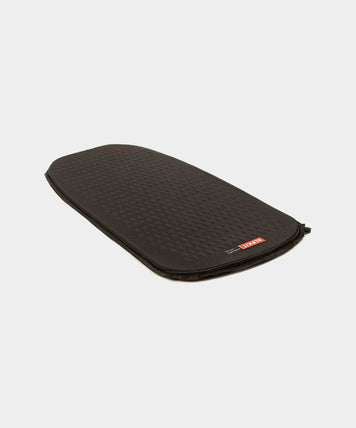
Alpkit Mats: EZ Sleeper folding foam mat

What is a self-inflating mat?
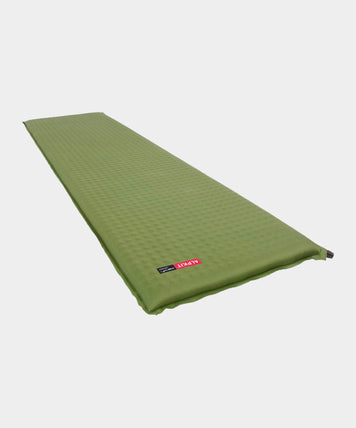
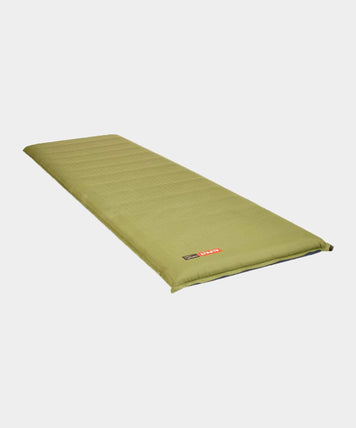
Self-inflating mats use open cell foam (the spongey stuff you use to wash your car) wrapped in a hard-wearing outer fabric. When you open the valve, this foam springs back into shape, sucking in air and inflating the mat. Most mats inflate within 5 minutes or so, but you may need to top up the air with a couple of lungfuls. Generally speaking, the thicker the mat, the warmer it will be.
People often call this type of mat a Thermarest® (in much the same way we call vacuum cleaners: ‘hoovers’) but there are a huge range of self-inflating mats available now.
Self-inflating mats offer the best of both worlds. The foam inside the mat traps lots of still air for insulation, and they’re much more comfy to lie on than the classic foam roll mat. Self-inflating mats can vary from beefy car camping mattresses to ultralight backpacking mats with ‘die-cut’ foam to reduce their overall weight. It’s important that you store self-inflating mats flat with the valve open; storing them rolled up and compressed can stop them from inflating properly when you next get them out.
Pros: The best balance of warmth, weight and comfort, less effort to inflate at the end of the day than inflatable mats
Cons: Not as packable as inflatable mats, can be punctured, need to be stored flat with the valve open, heavier than other mats
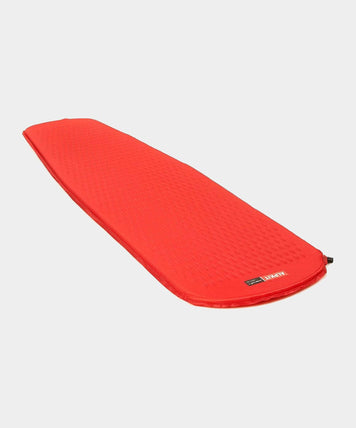
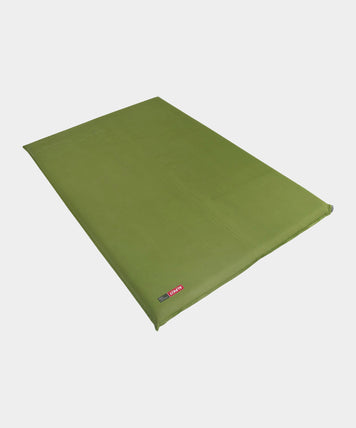
Alpkit Mats: Airo 120, Airo 180, Dirtbag, Dozer, Double Dozer

What is an inflatable mat?
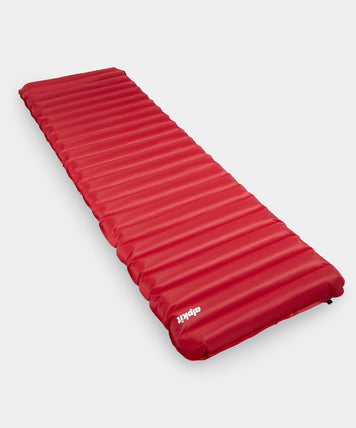
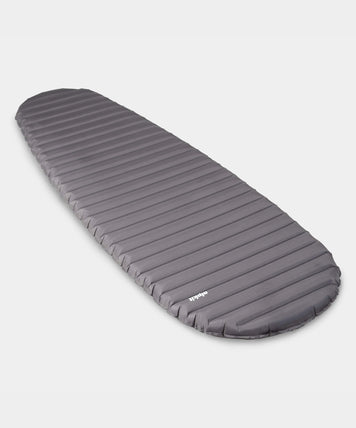
Inflatable sleeping mats provide insulation by still air within the mat's chambers. With their tiny pack-sizes, inflatable mats are increasingly the favoured option of lightweight backpackers and space-starved bikepackers. Some brands use reflective foil, synthetic insulation and down inside these chambers for extra warmth, although this does push the price up significantly.
Inflatable mats are lightweight, extremely comfortable and pack down incredibly small. However, they’re the least durable of all the mat options and can be a little cold for anything other than summer camping (without internal insulation). They can also be susceptible to mould and moisture build-up which can cause your mat to delaminate (the layers start coming apart). Using a pump bag to inflate your mat and storing it flat with the valve open can easily solve that issue though.
Pros: Lightweight, comfortable and by far the most packable
Cons: Not as warm as other types (without insulated chambers), can be punctured on sharp objects, you need a good set of lungs or a pump bag!
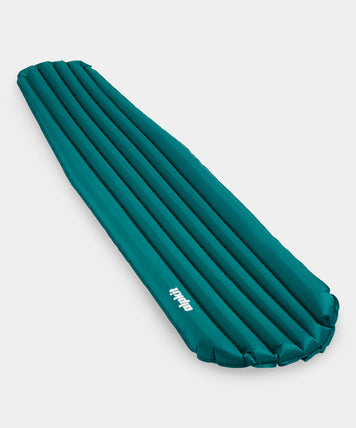
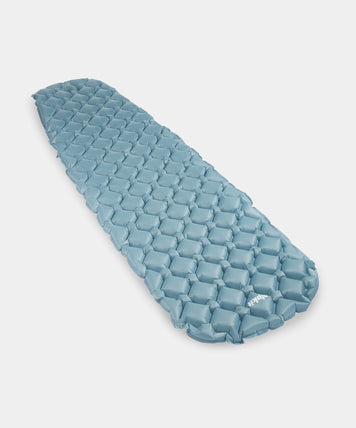
Alpkit Mats: Cloud Base, Numo, Dumo, Whisper
ALPTIP #1 – Baffled by baffles?
This is where it all gets a bit tech-y. The drawback of inflatable mats is that there’s usually nothing in the chambers to stop the air from moving about (unlike self-inflating mats).
When you lie on your mat, you warm the top layer of air with your body and the bottom layer of air is cooled by the ground. This difference in temperature causes air to circulate, causing heat loss by convection. You also lose heat from the air in the top part of your mat to the bottom through radiation.
Insulation?
Adding insulation (down or synthetic) inside the baffles reduces air movement and heat loss by convection. Reflective surfaces (often inside the mat itself) reduce heat loss through radiation (although these materials tend to rustle as you sleep).
Small or big baffles?
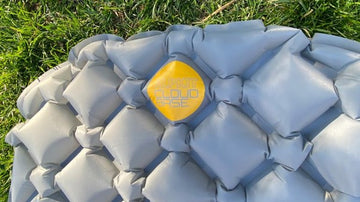
Sleeping mats with lots of small, separate baffles (like our Cloud Base) lose less heat through convection as it’s much harder for the air to circulate.
Vertical or horizontal baffles?
Vertical baffles (like those on our Numo mat) are more stable. When you move about in the night, you push the warm air directly underneath you in your mat to the edges. However, horizontal baffles (like those on the Dumo) means the chambers are smaller so there’s less heat lost through convection.
Does all this matter?!
Sort of! Insulated inflatable mats are significantly warmer. But you'll probably not notice much difference between a Numo and a Cloudbase. If you're worried about an inflatable mat not being warm enough outside of summer, we'd always recommend buying a self-inflating mat instead.
Airbeds
Many people still swear by the old-fashioned airbed. But unless you want to spend your whole evening manning a foot-pump or actively enjoy carrying heavy sheets of rubber up mountains, they’re best left alone!

How do I choose a camping mat?
Warmth
This will usually be the most important thing you think about when you’re choosing a sleeping mat. Think about what time of year you’re likely to use your sleeping mat and in what kind of climate. For colder conditions, you’ll definitely need an insulated, fairly thick mat. If you only a need a mat for the occasional summer bivvy, warmth is less important.
ALPTIP #2 – What are sleeping mat 'R values'?
R Values are a measure of how well your sleeping mat resists heat loss. An R value of 1.0 to 2.0 is fine for summer use but you’d need a rating of 4.0 to 5.0+ for winter camping.
The good news is that a testing standard was finally introduced in 2020 (ASTM FF3340). The bad news is that brands only have to include it in the American market, so it will continue to be difficult to compare sleeping mat warmth until an international standard is introduced.
Weight and pack size
What kind of trips do you want to use your sleeping mat for? If you need to carry your mat on multiday backpacking trips or fit it inside bikepacking bags, weight and pack-size could be crucial. You definitely wouldn’t want to carry a 5kg Double Dozer the length of the Cape Wrath Trail! But if you only have to carry your mat from the car to your tent, weight and pack-size probably won’t be that much of an issue.

Comfort
If you’re carrying your mat a long way, you’re probably prepared to sacrifice a little bit of comfort for less weight on your back/bike. But the longer the trip, the more important a good night’s sleep becomes. If you won’t be carrying your mat at all, you may as well opt for the comfiest car camping mattress that will fit in your boot – make that basecamp as luxurious as possible!
ALPTIP #3 – Inflating mats vs self-inflating mats
Some of us find the stability of self-inflating mats more comfortable than the cushioning of inflatable mats. Although, side sleepers often wake up with sore hips on shallower mats. It’s all down to personal preference so it’s a good idea to test out several mats in a shop first.
Durability
Getting a puncture in your sleeping mat miles from civilization could be a big problem without a puncture repair kit (all Alpkit mats are supplied with one of these for this reason). It can be hard to compare inflatable and self-inflating mats for durability as there are multiple different things which can affect it. That said, fabrics with a higher denier (thread thickness) will generally be more durable.
ALPTIP #4 – Avoiding punctures
Your mat could theoretically develop a puncture at any time, but the probability definitely increases the longer your trip or the rougher the surfaces you camp on. Using an additional tent footprint, sticking a foam roll mat underneath and putting your mat inside your bivvy bag all help to reduce the risk of punctures.
Mat shape
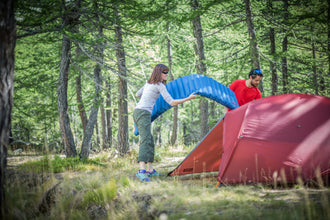
The mat shape will make a big difference to weight and pack-size but may also have an effect on its warmth and comfort. Mummy shaped sleeping mats are lighter and pack smaller but are easier to fall off. Three quarter length mats reduce weight and pack-size significantly but you might end up with cold legs in the night!
ALPTIP #5 – How to boost your sleeping mat’s warmth
If you don’t want to buy a separate sleeping mat for each season, you can boost the warmth of your inflatable or self-inflating mat by putting a closed-cell foam mat underneath it. This provides an extra layer of insulation from the cold ground for very little extra expense.
Mats matter but it’s not just a matter of mats
There are lots of things that can affect your sleep when you're camping, including how much you’ve had to eat and how… um… 'sheltering'… your shelter is. Remember that your sleeping mat is only one part of your overall sleep system, along with your sleeping bag and clothing. Choosing the right sleeping mat for the conditions is just the first step to guaranteeing a warm and comfortable night’s sleep.










Mountain Journal Entries